| Travel distance | 150 miles |
|---|---|
| Fastest time | 2h 50m |
| Daily trains | 14 |
| Ticket from |
Traveling from the eastern volcanic city of Catania to the northern seaside capital of Palermo involves a journey of approximately 150 miles across the rugged heart of Sicily. This trans-island rail route offers some of the most dramatic and contrasting landscapes in southern Italy. Passengers depart from the shadow of the towering Mount Etna, climb through the dry, golden, canyon-carved interior of central Sicily—passing near historic mountaintop towns like Enna—before finally descending toward the deep blue Tyrrhenian coast. With a fastest travel time of 2h 50m, taking the train is a highly relaxing, scenic, and sustainable way to explore the interior of the Mediterranean's largest island.
Selecting Train Types for Sicilian Transit
While Sicily does not currently feature the ultra-high-speed 190 mph Frecciarossa tracks found on the Italian mainland, the route between its two largest cities is highly efficient. The corridor is primarily operated by Trenitalia's modern Regionale Veloce (Fast Regional) diesel-electric trains. These sleek, climate-controlled single-deck and double-deck trains are surprisingly quiet and offer comfortable seating, large panoramic windows, and onboard power sockets. To secure the most competitive rate, which typically starts around $18.50, you can easily purchase tickets digitally in advance or directly at the station. Because regional train prices are fixed by distance, there is no price hike for booking last-minute, allowing travelers ultimate flexibility.
Practical Advice for First-Time Island Travelers
Navigating Sicilian rail travel is straightforward when you understand the local operations and ticketing requirements:
-
Direct vs. Connecting Trains: When booking, pay close attention to your itinerary. Many trains are direct, but some schedules require a quick, coordinated transfer at the junction station of Caltanissetta Xirbi.
-
Ticket Validation: If you purchase a physical paper ticket at a station kiosk, you must insert it into the green or yellow electronic validation machines located near the platforms before boarding. Digital tickets purchased through the Trenitalia app do not need physical validation but must be checked in via the app prior to the scheduled departure time.
-
Baggage and Comfort: There are no strict luggage weight limits, and trains feature overhead racks and open storage areas at the ends of carriages. It is highly recommended to bring your own water and snacks, as regional trains on this route do not typically feature a buffet car or trolley service.
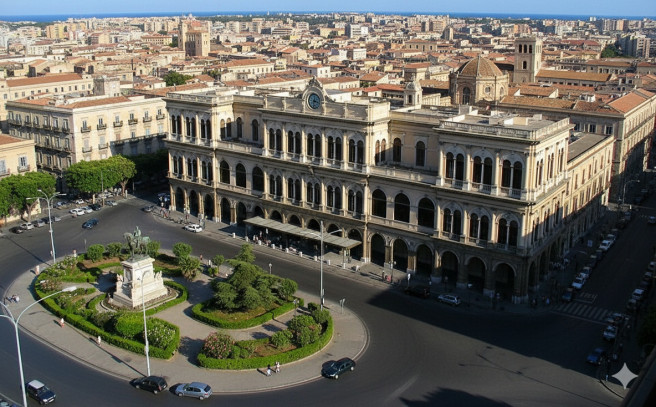
This historic terminal station is centrally located on the eastern coast of the city, right next to the Ionian Sea and the bustling port area. The station features a beautiful late 19th-century facade and is very easy to navigate, with all passenger services and platforms situated on a single ground level. Inside, travelers will find automated ticket kiosks, a staffed ticket office, a waiting room, and a classic Italian station bar for a quick pre-departure espresso and a cannolo. The station is well-connected to Catania's local metro line and various urban bus routes departing from the square outside.
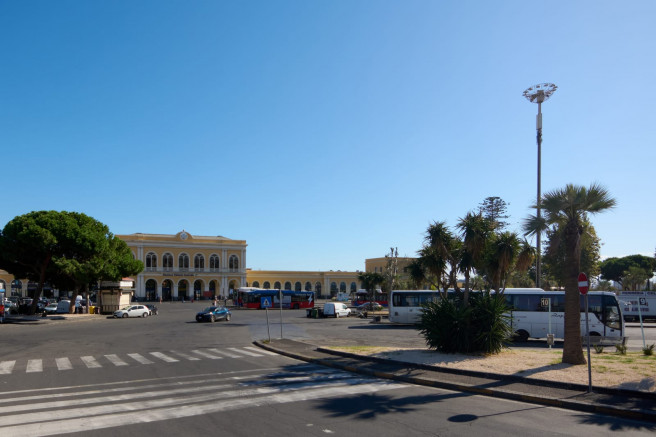
Situated at the southern edge of Palermo's historic center, the grand neo-classical terminal serves as the ultimate gateway to the capital. The station boasts a flat, linear platform layout that is exceptionally easy to exit with heavy luggage. Amenities within the concourse include retail shops, cafes, bookstores, and secure baggage storage services. Immediately outside the main entrance is a major transit plaza where you can catch municipal buses, local taxis, or board the Trinacria Express—the direct airport train linking the central station to Palermo's Falcone-Borsellino Airport. Major historic landmarks like the Palermo Cathedral and the bustling markets are within walking distance.