| Travel distance | 250 miles |
|---|---|
| Fastest time | 3h 40m |
| Daily trains | 20 |
| Ticket from |
Traveling from the grand, Habsburg-influenced port of Trieste on the far eastern border to the sleek, bustling financial metropolis of Milan involves a westbound transit of approximately 250 miles. This route carries passengers away from the rocky cliffs of the Karst plateau, curving past the northern tip of the Adriatic Sea, and slicing directly across the flat, fertile agricultural heartland of the Po Valley. With direct high-speed trains completing the journey in a fastest time of 3h 40m, this rail corridor is an exceptionally comfortable and efficient alternative to driving, seamlessly swapping the historic wind-swept plazas of Trieste for the cutting-edge fashion districts and soaring modern skyscrapers of Milan.
Selecting Your Train: High-Speed Directs vs. Regional Transfers
The rail corridor linking Trieste to Milan is highly active, with approximately 20 daily trains ensuring flexible options from early morning until late evening. Travelers have two primary options:
-
Direct Frecciarossa: Trenitalia operates premium, direct high-speed services daily that connect the two cities without any transfers. These state-of-the-art trains offer absolute luxury and speed, reaching velocities of up to 190 mph. Onboard amenities include multiple classes of service (Standard, Premium, Business, Executive), free Wi-Fi, power outlets at every seat, and a dedicated bistro car.
-
Coordinated Connections: A highly common alternative is to take a frequent Regionale Veloce (Fast Regional) train from Trieste to Venezia Mestre or Verona Porta Nuova, and transfer to a high-speed Frecciarossa or Italo train for the final leg to Milan.
To secure the most competitive fares, which can start from a highly affordable $29.00, it is highly recommended to book your tickets digitally well in advance, as high-speed ticket prices rise dynamically closer to the departure date.
Practical Advice for Trans-Valley Rail Travel
Success when navigating this long-distance route is simple when you are familiar with standard Italian boarding and booking protocols:
-
Seat Assignments: All high-speed Frecciarossa and Italo tickets automatically include a mandatory seat reservation, which is clearly marked on your digital ticket as the carriage (carrozza) and seat number (posto). Connecting regional trains operate on a first-come, first-served basis.
-
Ticket Validation: If your journey includes a regional segment and you are using a physical paper ticket, you must validate it in the electronic green or yellow stamping machines on the platform before you board to avoid steep on-the-spot fines. Digital regional tickets do not need physical validation but must be checked in via the Trenitalia mobile app prior to scheduled departure. High-speed tickets do not require validation.
-
Luggage Storage: There are no strict luggage weight limits. Smaller bags fit easily in the overhead racks above your seat, while larger suitcases should be stored in the designated racks at the end of each carriage.
Trieste's terminal railway station is a historic, majestic building featuring grand Neo-Renaissance architecture that reflects its past as the principal seaport of the Austro-Hungarian Empire. The station features a flat, terminal-style layout where all platforms terminate directly at the main concourse, making it exceptionally easy to navigate even with heavy luggage. Inside, travelers will find essential services, including automated ticket kiosks, a staffed travel center, baggage storage, and a lively station bar for a quick pre-departure espresso. The station is located just a short, flat ten-minute walk from the historic old town and the spectacular, sea-facing Piazza Unità d'Italia.
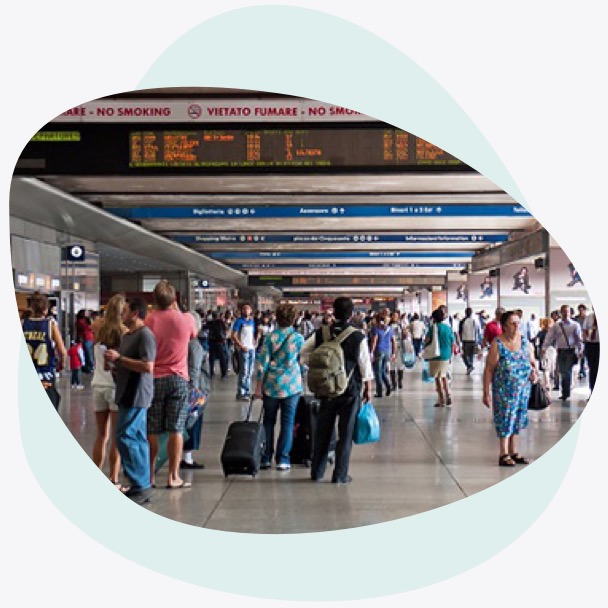
Arriving at this world-famous architectural masterpiece places you at the absolute epicenter of Northern Italy's transport network. The station is a massive multi-level facility with the main train platforms located on the top floor and the metro lines (Yellow M3 and Green M2) situated in the basement for immediate access to the Duomo or the Brera district. Travelers will find every possible amenity here, including secure luggage storage, international currency exchanges, and a vast selection of high-end shopping and dining options. Taxis are located directly outside the grand front entrance.