| Travel distance | 165 miles |
|---|---|
| Fastest time | 3h 15m |
| Daily trains | 14 |
| Ticket from |
Traveling from the sun-drenched Adriatic port capital of Bari back to the high-energy, historic metropolis of Naples involves a scenic journey of approximately 165 miles across the mountainous "ankle" of the Italian peninsula. This westbound route carries passengers away from the coastal plains of Puglia, climbing into the rugged, olive-strewn valleys of the Apennine Mountains, passing through the historic inland rail junctions of Foggia and Caserta, before finally descending into the bustling Tyrrhenian basin. With direct trains completing the journey in a fastest time of 3h 15m, this trans-regional route is a highly efficient, relaxing, and scenic alternative to driving across the winding, toll-heavy highways of southern Italy.
Selecting Your Train: Direct Services and Connections
The rail corridor linking Bari to Naples is well-served, with approximately 14 daily departures ensuring excellent flexibility. Travelers have three primary options when planning their trip:
-
Direct Frecciarossa / Frecciargento: Trenitalia's premium high-speed services offer the fastest and most comfortable direct connection, completing the trip in just over 3 hours. These state-of-the-art trains feature climate-controlled carriages, power outlets, free Wi-Fi, and multiple service classes (Standard, Premium, Business, Executive).
-
Intercity Trains: A highly popular, direct, and economical option. These trains take roughly 3h 45m to 4 hours, providing a classic, comfortable rail experience with assigned seating.
-
Regionale Veloce (Fast Regional): These regional services typically require a quick, coordinated transfer at Foggia or Caserta. Fares start at an affordable $16.50 and remain fixed, making them the ultimate flexible choice for spontaneous travelers.
(Note: Italy is currently constructing a major high-speed rail line directly linking Bari and Naples, which is progressively opening segments to reduce trans-peninsular travel times even further.)
Expert Tips for Southern Italy Rail Travel
Success when navigating this cross-country route is straightforward when you are familiar with standard Italian boarding and ticketing procedures:
-
Seat Reservations: High-speed and Intercity tickets automatically include a mandatory seat assignment, which is clearly printed on your digital booking as the carriage (carrozza) and seat number (posto). Regional trains (Regionale Veloce) do not have assigned seating and operate on a first-come, first-served basis.
-
Ticket Validation: If you utilize regional trains for any portion of your journey and are carrying a physical paper ticket, you must validate it in the electronic green or yellow machines at the station before stepping onto the train. Digital regional tickets do not need a machine stamp but must be officially "checked in" via the Trenitalia app on your smartphone before the scheduled departure. High-speed and Intercity tickets do not require validation.
-
Onboard Refreshments: Because the transit is over three hours long, it is highly recommended to bring a bottle of water and some snacks with you, as regional and Intercity trains may not always feature active trolley services.
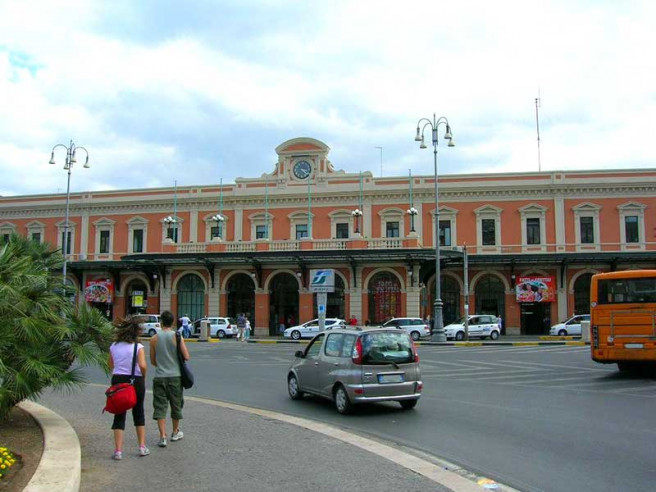
Bari's primary station is centrally located, acting as the main gateway to the Puglia region. The station is clean, functional, and very easy to navigate, with all platforms accessed via broad pedestrian underpasses. Inside, travelers have access to automated ticket kiosks, passenger waiting areas, and a classic station bar for a quick pre-departure espresso. The station is perfectly positioned just a short, flat ten-minute walk from the historic old town (Bari Vecchia) and the scenic seaside promenade.
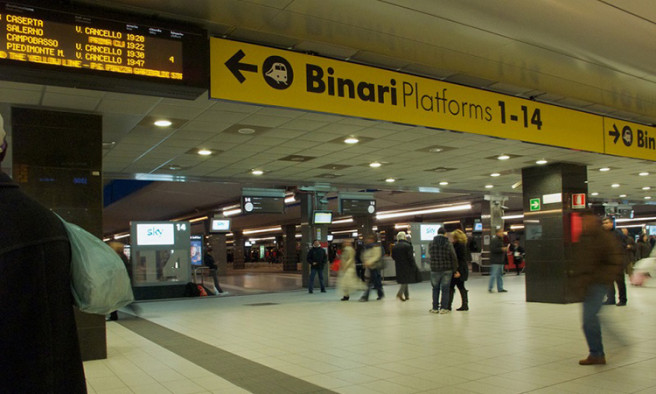
Arriving at Naples' grand central terminal places you at the absolute epicenter of Southern Italy's transit system. This massive, modern facility features a bustling passenger concourse lined with local pastry shops—perfect for grabbing a fresh, warm sfogliatella upon arrival—alongside boutiques, bookstores, and secure luggage storage services. Below the main platforms lies the Piazza Garibaldi station, providing immediate access to Metro Lines 1 and 2, as well as the Circumvesuviana line for local commuter links to Pompeii and Sorrento. Taxis and city buses are highly active in the plaza directly outside.