| Travel distance | 97 miles |
|---|---|
| Fastest time | 1h 37m |
| Daily trains | 30 |
| Ticket from |
Traveling from the romantic floating city of Venice to the grand, Habsburg-influenced port of Trieste involves a transit of approximately 97 miles along the upper rim of the Adriatic Sea. This scenic route curves northeastward across the flat Venetian plains of Veneto and Friuli-Venezia Giulia, passing historic rivers like the Piave and the Isonzo before making a dramatic final approach along the high, rocky coastline of the Karst plateau. Passengers can complete this scenic transition in a fastest time of 1h 37m. It is a highly efficient, stress-free alternative to driving, seamlessly transitioning you from the water-locked canals of Venice to the sweeping, wind-swept plazas of Trieste.
Selecting Train Types: Regional Veloce vs. High-Speed
The corridor between Venice and Trieste is exceptionally well-connected, with roughly 30 daily trains plying the route from early morning until late evening. Travelers have two main options:
-
Regionale Veloce (Fast Regional): These frequent trains are operated by Trenitalia and take about 2 hours to complete the trip. They offer fixed-price tickets starting around $16.50, meaning there is no financial penalty for buying your ticket at the last minute.
-
Frecciarossa (High-Speed): These premium trains offer the fastest journey times (~1h 40m) and absolute luxury, featuring multiple classes of service, silent zones, and onboard power outlets. Fares are dynamic, so booking well in advance via digital platforms is key to finding the lowest price.
Some services depart directly from Venezia Santa Lucia, while others require a quick and easy transfer at the mainland hub of Venezia Mestre.
Expert Tips for Northern Adriatic Rail Travel
Success when navigating this route is straightforward when you are familiar with local ticketing policies and the unique geographic layout of the coastal run.
If you are using a physical paper ticket for the Regionale Veloce services, you must validate it in the electronic green or yellow stamping machines near the platforms before you board to avoid steep fines. If you use a digital regional ticket, ensure you tap "check in" on your mobile app prior to the scheduled departure. High-speed Frecciarossa bookings automatically include a mandatory seat reservation and do not require separate validation.
For the most spectacular views, try to secure a seat on the right-hand side of the carriage when traveling east toward Trieste. As the train approaches its final destination, the tracks run right alongside the sheer coastal cliffs of the Gulf of Trieste, offering breathtaking panoramas of the deep blue Adriatic Sea and Miramar Castle.
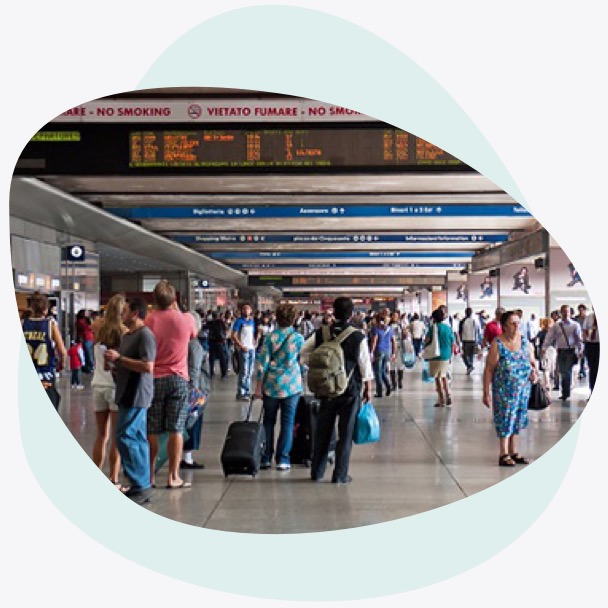
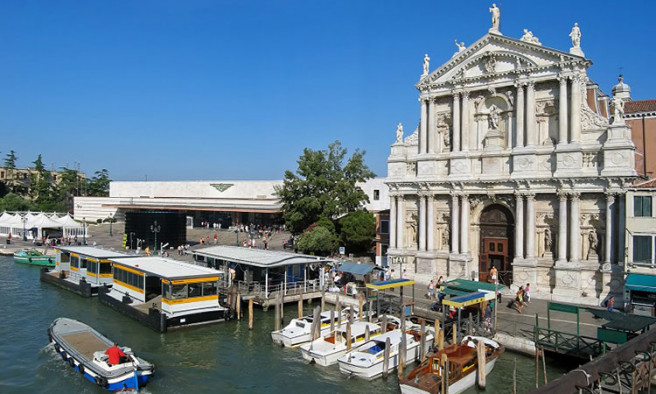
This iconic modernist terminal is situated directly on the Grand Canal, making it one of the most unique arrival and departure points in the world. The station features twenty-three platforms on a single, completely flat level, which makes walking with heavy luggage very easy. Inside, travelers will find abundant shops, bookstores, cafes, and secure baggage storage facilities. Immediately outside the main entrance steps, you will find the vaporetto (water bus) docks, allowing you to step off your train and straight onto a boat toward St. Mark's Square or the Rialto Bridge.
Trieste's terminal railway station is a historic, majestic building featuring grand Neo-Renaissance architecture that reflects its past as the principal seaport of the Austro-Hungarian Empire. The station has a flat, straightforward layout with all tracks terminating at the main concourse. Essential services include automated ticket kiosks, a manned ticket office, luggage storage, and a lively station bar for a quick espresso. Located just a short, flat ten-minute walk from the historic old town and the spectacular Piazza Unità d'Italia, the station is also the primary hub for local buses heading to the nearby Karst plateau and cross-border coaches bound for Slovenia and Croatia.