| Travel distance | 80 miles |
|---|---|
| Fastest time | 3h 10m |
| Daily trains | 30+ |
| Ticket from |
Traveling from the deep, mountain-fringed waters of Como to the floating city of Venice involves a journey of approximately 180 miles across Northern Italy. This highly popular trans-regional route offers an incredible transition of landscapes. Passengers depart from the steep, forested foothills of the Alps, glide through the bustling urban center of Lombardy, speed across the vast agricultural plains of the Po Valley, and finally cross the Liberty Bridge over the salt waters of the Venetian Lagoon. With a fastest travel time of 3h 10m, the train is the ultimate way to travel, seamlessly exchanging lakeside elegance for the historic canals of Venice.
Navigating Train Types and Transfers
Because Como is nestled in the northern lake district, traveling to Venice typically requires a two-stage journey with a smooth transfer at the grand railway hub of Milano Centrale.
-
The Lakeside Leg (Como to Milan): This 40-minute segment is heavily served by frequent Trenord regional trains and cross-border Swiss EuroCity (EC) trains terminating at Milano Centrale.
-
The High-Speed Sprint (Milan to Venice): Upon transferring in Milan, passengers board Italy’s premier high-speed fleets—either Trenitalia's Frecciarossa or the private Italo network—for a rapid, comfortable 2.5-hour run to Venice at speeds reaching up to 190 mph.
To secure the most competitive rate, which can start from $26.00, it is highly recommended to book the high-speed portion of your journey well in advance, as those fares are dynamic. The regional fare for the Como-to-Milan segment is fixed, offering flexibility to take a long lunch break or do some sightseeing in Milan during your transfer.
Practical Advice for Cross-Country Travel
Success when navigating this route depends on understanding the ticketing requirements and boarding protocols of different train networks:
-
Seat Assignments: All high-speed Frecciarossa and Italo tickets automatically include a mandatory seat reservation, which is clearly indicated on your booking confirmation as the carriage (carrozza) and seat number (posto). Regional segments do not have assigned seats and are first-come, first-served.
-
Ticket Validation: If you purchase a physical paper ticket at the station for the regional leg to Milan, you must validate it in the electronic green or yellow machines near the platforms before boarding to avoid steep fines. Digital regional tickets do not require machine stamping but must be checked in via your mobile booking app prior to the scheduled departure time.
-
Lagoon Arrival: Ensure your ticket lists Venezia Santa Lucia as your final destination. Some trains stop at the mainland industrial station of Venezia Mestre first; do not get off there unless you are transferring, as Santa Lucia is the historic terminal located directly on the water.
The main railway station for the city of Como is situated on a hill, offering beautiful vistas of the surrounding mountain slopes. The facility is clean and well-organized, featuring ticket offices, automated kiosks, a passenger waiting area, and a traditional station bar for a quick Italian espresso before your departure. It is located just a ten-minute walk downhill from the historic city center and the main ferry terminals.
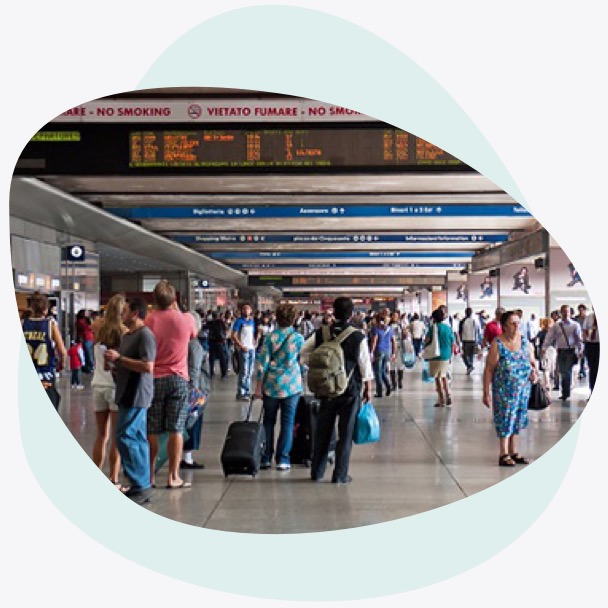
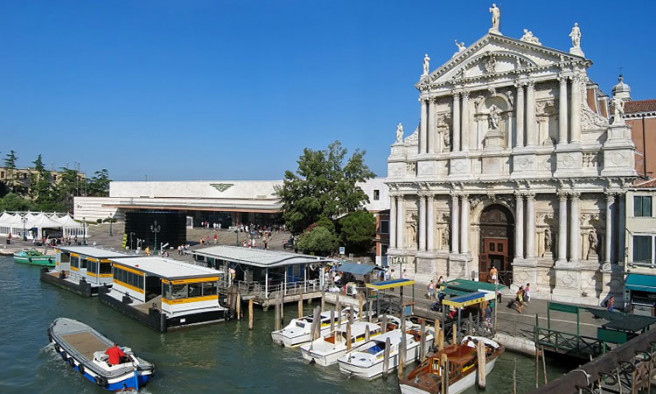
This iconic modernist terminal is situated directly on the Grand Canal, making it one of the most unique arrival points in the world. The station features twenty-three platforms on a single, completely flat level, which makes walking with heavy luggage exceptionally easy. Inside the bustling complex, travelers will find abundant shops, bookstores, cafes, and secure luggage storage services. Immediately outside the main entrance steps, you will find the vaporetto (water bus) docks, allowing you to step off your train and straight onto a boat toward St. Mark's Square or the Rialto Bridge.