| Travel distance | 323 miles |
|---|---|
| Fastest time | 3h 50m |
| Daily trains | 30 |
| Ticket from |
Traveling from the historic heart of Rome to the elegant, baroque capital of Turin involves a journey of approximately 323 miles. This route utilizes Italy’s premier north-south high-speed rail spine, cutting swiftly through the volcanic valleys of Lazio, the clay hills of Tuscany, across the flat agricultural expanse of the Po Valley, and terminating in the majestic shadow of the Western Alps. Passengers can complete this sweeping trans-regional crossing in a fastest time of just 3h 50m. Taking the train is vastly superior to driving or flying, delivering you directly from one central city hub to another without airport queues or highway tolls.
Selecting Train Types for Your Journey
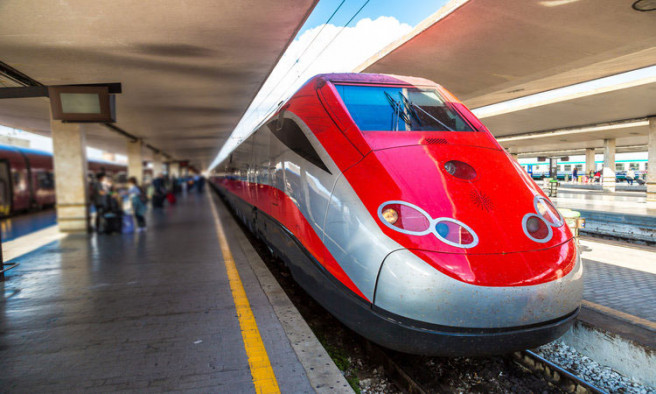
The rail corridor between Rome and Turin is exceptionally active, with approximately 30 daily high-speed connections keeping the two metropolises tightly linked. Travelers have two primary options, both offering exceptional modern comfort and speeds of up to 190 mph:
-
Frecciarossa (Trenitalia): The flagship state-run fleet offers frequent direct services. These trains feature four classes of service (Executive, Business, Premium, and Standard), silent zones, free Wi-Fi, and a dedicated bar car.
-
Italo (Nuovo Trasporto Viaggiatori): A private high-speed operator offering highly competitive rates, excellent customer service, and distinct service classes (Smart, Comfort, Prima, and Club Executive).
To secure the most competitive fares, which can start as low as $35.00, it is highly recommended to book your tickets digitally well in advance, as high-speed ticket prices rise significantly closer to your departure date.
Practical Advice for First-Time Italy Rail Travelers
Navigating the high-speed rail link is highly efficient if you are familiar with standard Italian boarding and booking protocols:
-
Seat Assignments: Unlike regional lines, all high-speed tickets for both Frecciarossa and Italo automatically include a mandatory seat reservation. Your ticket will clearly display your carriage (carrozza) and seat number (posto).
-
Ticket Validation: Digital tickets purchased online or through mobile apps do not require physical stamping or activation; simply keep the QR code ready on your smartphone for the conductor to scan once the train is underway.
-
Luggage: There are no weight limits for bags, and you do not need to check them. Store smaller bags in the overhead racks above your seat and larger suitcases in the designated compartments at the end of each carriage.
As the primary transportation hub in the capital, this terminal is centrally located and serves as the main gateway for northern-bound high-speed departures. The massive station features an extensive subterranean shopping mall and a wide array of dining options on the main concourse to grab refreshments for the trip. It is important to monitor the large digital boards (Partenze) for your platform or binario number, which is typically announced 10 to 15 minutes before the train departs. The station is directly connected to Rome's Metro lines A and B, as well as extensive taxi and bus bays directly outside the main exit.
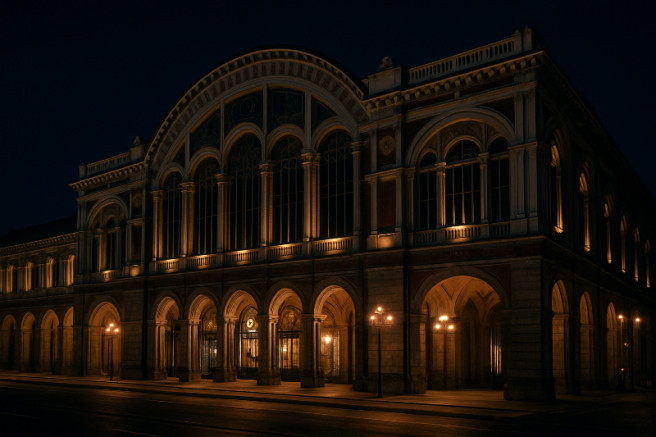
Your journey concludes at Turin’s grand central terminal, an architectural masterpiece famous for its beautiful 19th-century vaulted iron and glass ceiling. The terminal operates on a flat, single-level layout, making navigation with luggage incredibly easy. The station is situated directly at the southern edge of the historic city center, placing you within a short walk of iconic attractions like the Egyptian Museum and the royal palaces. Immediately outside the exit, travelers can access Turin's efficient underground metro line, the municipal tram network, taxi stands, and express bus shuttles connecting to the Turin-Caselle Airport.