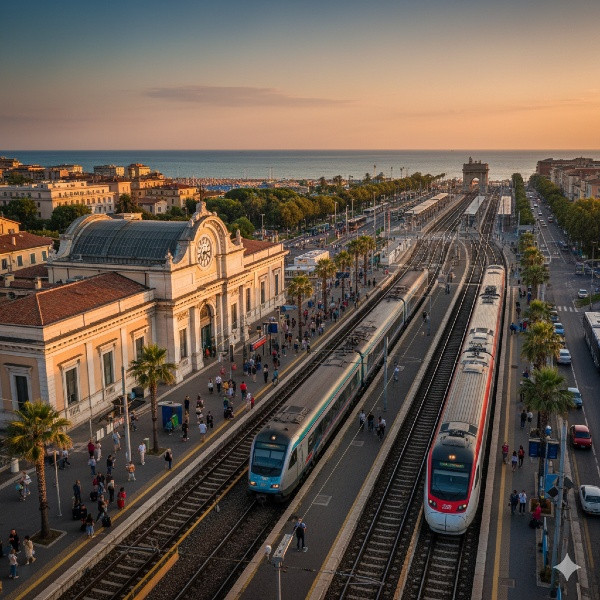
| Travel distance | 100 miles |
|---|---|
| Fastest time | 2h 00m |
| Daily trains | 30 |
| Ticket from |
Traveling from the Renaissance capital of Florence to the vibrant seaside resort of Rimini involves a journey across approximately 100 miles. This route connects the cultural heart of Tuscany with the popular beaches of the Adriatic coast. Passengers can reach the sea in a fastest time of 2h 00m, typically utilizing a high-speed connection through the hub of Bologna. The journey offers a diverse visual narrative, moving from the rolling hills and tunnels of the Apennines into the flat, fertile plains of Emilia-Romagna before finally arriving at the coastal horizon.
Choosing Train Types for Your Journey
The corridor between these two cities is well-served with approximately 30 daily trains, providing significant flexibility for both day-trippers and those heading for a longer holiday. Most travelers utilize a two-stage approach: a high-speed Frecciarossa or Italo train from Florence to Bologna (a quick 35-minute sprint), followed by a Regional Veloce or Intercity service heading toward Rimini. To secure the most competitive rate, which can start from $18.00, it is advisable to book the high-speed segment in advance. Regional fares remain fixed, offering flexibility for those who might want to spend a few hours exploring Bologna during their transfer.
Expert Tips for First Time Italy Rail Travelers
Success when navigating this route depends on managing the transfer at Bologna Centrale and understanding the differing rules for high-speed and regional trains. High-speed tickets include a mandatory seat reservation, while regional trains do not. If you are using a physical paper ticket for the regional leg to Rimini, you must validate it in the green or yellow machines at the station before boarding. Digital tickets purchased via mobile apps must be "checked in" before the train departs. Arriving at the platform fifteen minutes early is usually sufficient to locate your carriage and settle in for the journey toward the coast.
This primary station is centrally located and serves as a vital junction for the national high-speed network. The modernist terminal features a large concourse with nineteen tracks located on a single level, making it easy to navigate for those with heavy bags. Travelers will find numerous shops, cafes, and luggage storage facilities within the main building. It is within walking distance of major sights like the Duomo and provides direct connections to local tram lines and the airport shuttle.
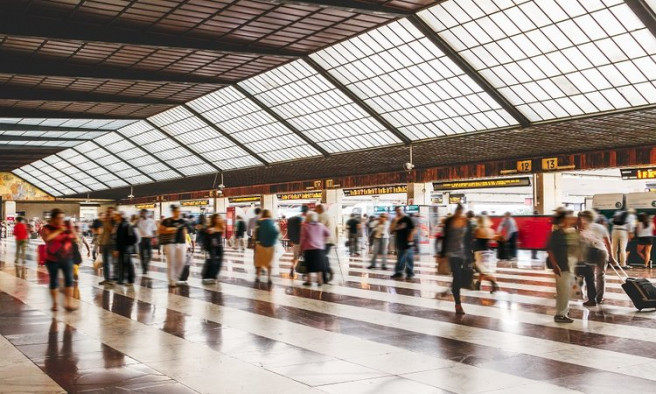
The station is situated just a short walk from both the historic city center and the main beach area. The facility is well-organized with a central concourse featuring ticket offices, automated machines, and several cafes. Arriving passengers can find local bus connections immediately outside the entrance, providing links to the various seaside resorts along the coast or the nearby Republic of San Marino. The city’s historic Roman arch and bridge are also within easy walking distance of the station exit.