| Travel distance | 582 miles |
|---|---|
| Fastest time | 9h 15m |
| Daily trains | 4 |
| Ticket from |
Traveling from the Renaissance capital of Florence to the bustling global metropolis of Paris involves a magnificent journey of approximately 582 miles. This northbound international rail route offers an extraordinary geographic transition. Passengers depart the terracotta-lined hills of Tuscany, speed across the flat and fertile Po Valley of Northern Italy, ascend into the dramatic, snow-dusted peaks of the Alps, and finally glide through the scenic, rolling plains of eastern France. With a fastest travel time of 9h 15m, this journey is a premier, eco-friendly alternative to flying, transforming a simple transit into a memorable European sightseeing experience.
Navigating Train Types and Connections
Due to the transalpine geography, this journey is typically completed in two distinct, high-speed stages, with a highly coordinated transfer at the grand railway hub of Milano Centrale. The first leg consists of a rapid 1h 40m sprint from Florence to Milan aboard Italy’s state-of-the-art Frecciarossa or Italo fleets, traveling at speeds up to 190 mph. From Milan, passengers board international transalpine high-speed trains, such as the French TGV or Trenitalia’s cross-border Frecciarossa services, for the spectacular crossing into France. To secure the most economical fares, which can start from $55.00, it is highly recommended to book the entire journey several months in advance, as international high-speed tickets operate on a dynamic pricing scale.
Pro Tips for International Cross-Border Rail Travel
Navigating a long-distance European rail trip is straightforward when you are familiar with the essential ticketing and boarding protocols. Although formal border controls are rare within the open-border Schengen Area, travelers must always carry a valid passport or national identity card. High-speed bookings on both the Italian and French segments include a mandatory seat reservation, which is clearly indicated on your digital ticket along with your carriage (carrozza or voiture) and seat number. If any portion of your journey utilizes regional connecting trains, you must validate physical paper tickets in the station machines before boarding, or "check in" your digital regional ticket via your mobile app. Arriving at your departure platform fifteen to twenty minutes early will give you ample time to locate your carriage and secure overhead luggage space.
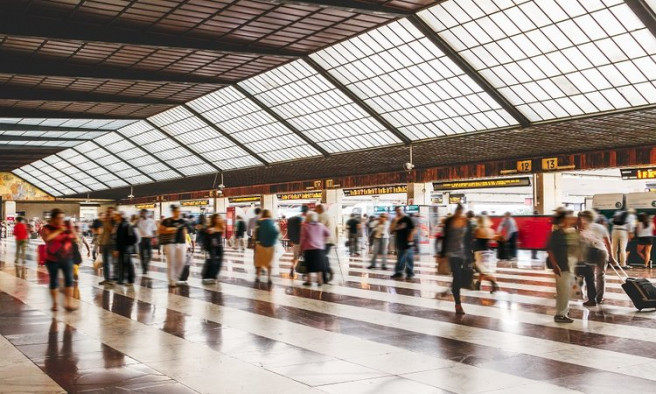
This central terminal is the primary railway gateway for Tuscany and serves as the starting point for your journey. Designed in a striking modernist style, the station features nineteen platforms situated on a single, easily navigable level, eliminating the need to haul heavy bags up flights of stairs. Inside, travelers will find various cafes, boutiques, a pharmacy, and secure luggage storage services. The station is located just a short walk from major landmarks like the Duomo and is directly connected to the local tramway network and city bus routes.
Your journey concludes at one of Paris's most historic and architecturally grand terminals, located in the southeastern quadrant of the French capital. Famous for its ornate clock tower and the legendary Belle Époque restaurant Le Train Bleu on the upper level, this bustling station is exceptionally well-connected. Arriving passengers can easily transition to Metro lines 1 and 14, or the RER suburban express lines, allowing for swift transit to any district of the city or onward connections to other Parisian terminals.