| Travel distance | 115 miles |
|---|---|
| Fastest time | 2h 05m |
| Daily trains | 18 |
| Ticket from |
Traveling from the medieval spiritual center of Assisi to the Renaissance cradle of Florence involves a scenic transit across a travel distance of 115 miles. This route provides a stunning visual narrative of central Italy, moving through the lush Tiber Valley and into the iconic rolling hills of Tuscany. Passengers can reach the heart of Florence in a fastest time of 2h 05m, enjoying a journey that transitions from the pink stone architecture of the Umbrian hills to the grand marble facades of the Tuscan capital. It is an ideal route for those looking to combine historical exploration with a relaxing transit through the rural heartland.
Choosing the Best Train Types for Your Journey
The corridor between these two cultural hubs is well-served by approximately 18 daily trains, providing consistent options from early morning until late evening. The route is primarily operated by Regional Veloce and Intercity services. While there are several direct trains available each day, some itineraries may involve a quick and efficient transfer at the regional hub of Foligno or Terontola-Cortona. To secure the most competitive rate, which can feature a ticket from $16.80, it is advisable to check schedules through official digital channels. These trains are designed for regional comfort, featuring large windows that are perfect for viewing the vineyards and olive groves of the Chiana Valley.
Expert Guidance for First Time Italy Rail Travelers
Success when navigating the rail system for this route depends on understanding the station locations and local ticketing rules. First-time travelers should note that the Assisi station is located in the valley below the historic town; a local bus provides frequent links to the hilltop center. If you are using a physical paper ticket for regional services, it is mandatory to validate it in the green or yellow machines at the station before boarding to avoid potential fines. Digital tickets are scanned directly from your mobile device and do not require further validation. Arriving at the platform fifteen minutes early is usually sufficient to identify your track and find a seat for the journey toward the north.
The station is situated in the district of Santa Maria degli Angeli, at the foot of the hill where the historic city sits. The facility is modest but efficient, featuring a ticket office, automated kiosks, and a small cafe. Immediately outside the main exit is the bus stop for the "Linea C" shuttle, which climbs the hill to the various gates of the old town every 20 to 30 minutes. The station also offers views of the Basilica of Santa Maria degli Angeli and its famous dome, which is located just a short walk away.
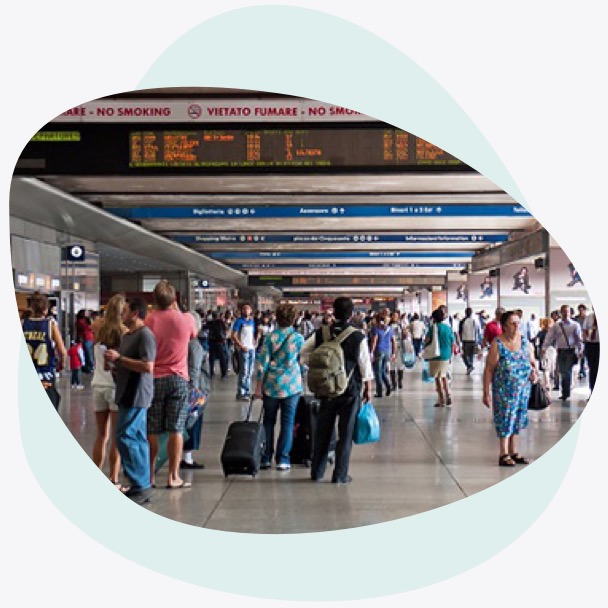
Arriving at this major terminal places you in the heart of the city, within a ten-minute walk of the iconic Duomo and the Uffizi Gallery. The station features a functional modernist design with all nineteen platforms located on a single level, making navigation straightforward even with heavy luggage. Travelers will find numerous shops, cafes, and secure storage facilities within the main building. Taxis are available immediately outside the exit, and the local tram network provides direct links to the outer districts and the airport.