


| Travel distance | 140 miles |
|---|---|
| Fastest time | 2h 40m |
| Daily trains | 20 |
| Ticket from |
Traveling from the historic port city of Genoa to the Renaissance cradle of Florence involves a transit across approximately 140 miles. This route offers a spectacular geographical transition, moving from the sparkling Tyrrhenian coastline, across the rugged Apennine mountains, and eventually into the inland valleys of Tuscany. Passengers can reach the city of the lilies in a fastest time of 2h 40m, enjoying a journey that bridges the vertical, pastel-colored charm of the Italian Riviera with the artistic heritage of the Tuscan capital.
Selecting Train Types for Southbound Travel
The corridor between these two major hubs is well-served with approximately 20 daily connections. Travelers can choose between direct Intercity services, which follow the scenic coastal line via Pisa, or high-speed Frecciarossa connections that typically involve a rapid transfer in Milan or a transit through the mountains. To secure the most competitive rate, which can include a ticket from $15.90, it is highly recommended to utilize digital booking platforms in advance. While the high-speed options prioritize time and luxury, the Intercity and regional trains provide a more leisurely pace that is ideal for viewing the rocky cliffs and hidden coves of the Ligurian shore.
Expert Tips for First Time Italy Rail Travelers
Success when navigating the rail system for this route depends on managing the station locations and understanding the differing rules for various train categories. For high-speed and Intercity services, a seat reservation is mandatory and automatically included in your booking. If your itinerary involves regional segments, you must remember to validate your physical paper ticket in the electronic machines (green or yellow) located at the station before boarding to avoid potential fines. Digital tickets are widely accepted and can be presented directly on your mobile device. Arriving at the platform fifteen minutes early is usually sufficient to locate your carriage and settle in for the journey toward the south.
The main station of the city is a grand architectural landmark situated near the historic harbor and the Aquarium. Upon arrival for departure, passengers will find a multi-level facility with essential services including ticket offices, automated machines, and diverse dining options. The station is perfectly positioned for visitors who have been exploring the narrow "caruggi" (alleys) of the old town or the maritime museums. Clear digital displays provide real-time boarding information for all southbound services.
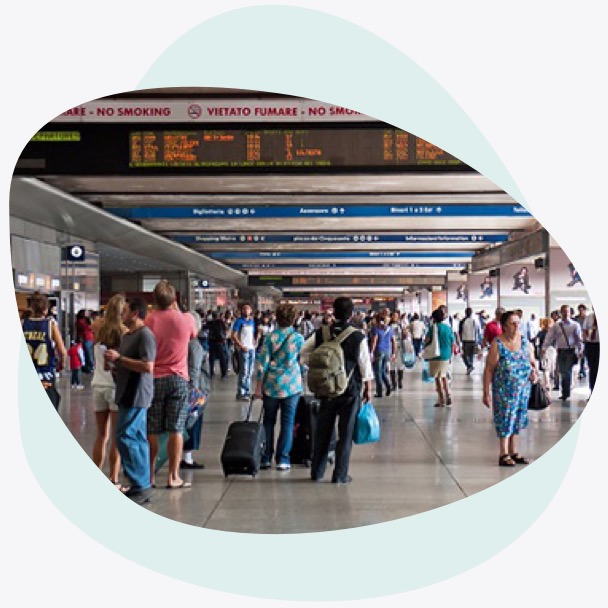
Arriving at this major terminal places you in the heart of the city, within a ten-minute walk of the iconic Duomo and the Uffizi Gallery. The station features a functional modernist design with all nineteen platforms located on a single level, making navigation straightforward even with heavy luggage. Travelers will find numerous shops, cafes, and secure storage facilities within the main building. Taxis are available immediately outside the exit, and the local tram network provides direct links to the outer districts and the airport shuttle.