


| Travel distance | 150 miles |
|---|---|
| Fastest time | 2h 45m |
| Daily trains | 25 |
| Ticket from |
Traveling from the major maritime gateway of Civitavecchia to the Renaissance capital of Florence involves a transit across approximately 150 miles. This route connects the primary cruise port for Central Italy with the cultural heart of Tuscany. Passengers can reach the city center in a fastest time of 2h 45m, typically utilizing a coastal regional or Intercity service followed by a high-speed sprint from Rome. The journey offers a scenic transition from the refreshing sea air and rocky vistas of the Tyrrhenian shoreline to the iconic rolling hills and cypress-lined landscapes of the Italian interior.
Selecting Train Types for Your Northbound Transit
The corridor is well-served with approximately 25 daily connections, making it easy to coordinate your departure with ship arrivals or coastal stays. Most travelers utilize a two-stage approach: a frequent Regional or Intercity service to Roma Termini or Roma Tiburtina, followed by the elite Frecciarossa or Italo high-speed fleets for the final leg to Florence. Direct Intercity trains occasionally ply the coastal route, offering a seamless journey without transfers. To secure the most competitive rate, which can feature a ticket from $16.90, it is advisable to book the high-speed segments in advance. While the rapid services prioritize time, the regional legs offer a more leisurely pace with ample space for luggage.
Expert Tips for First Time Italy Rail Travelers
Success when navigating the rail system for this route depends on managing the transfer—usually in Rome—and understanding the specific ticketing requirements. High-speed and Intercity bookings include a mandatory seat reservation which is clearly indicated on your digital confirmation. For regional segments, it is essential to remember that physical paper tickets must be validated in the green or yellow machines located at the station before boarding to avoid potential fines. Digital tickets do not require validation but should be ready on your mobile device for inspection. Arriving at the terminal fifteen minutes early allows sufficient time to identify your platform and find your carriage for the journey north.
The station is the primary gateway for the cruise port and is situated just a short distance from the historic waterfront. The facility is equipped with elevators to assist those with heavy luggage, and the main hall features ticket offices, automated machines, and a small cafe. Immediately outside the exit, travelers can find the official taxi rank and the "Port Link" shuttle buses that transport passengers directly from the ship terminals. For those with extra time, the Forte Michelangelo and the local seaside promenade are within easy walking distance.
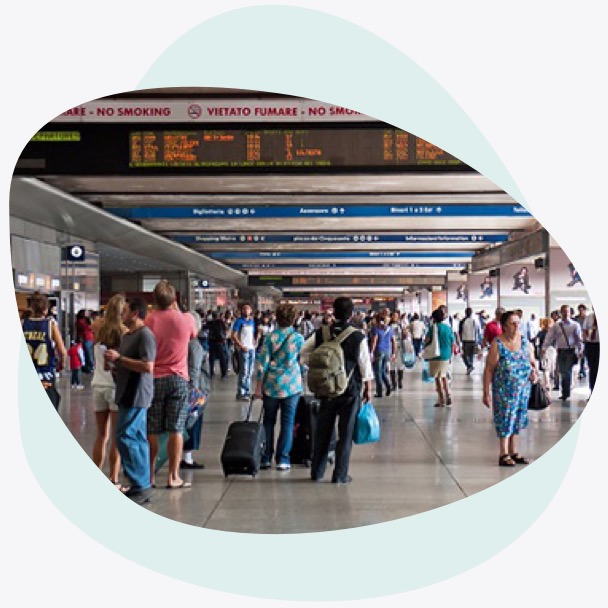
Arriving at this major terminal places you in the heart of the city, within a ten-minute walk of the iconic Duomo and the Uffizi Gallery. The station features a functional modernist design with all nineteen platforms located on a single level, making navigation straightforward even with heavy luggage. Travelers will find numerous shops, cafes, and secure storage facilities within the main building. Taxis are available immediately outside the exit, and the local tram network provides direct links to the outer districts and the airport shuttle for those continuing their journey.